
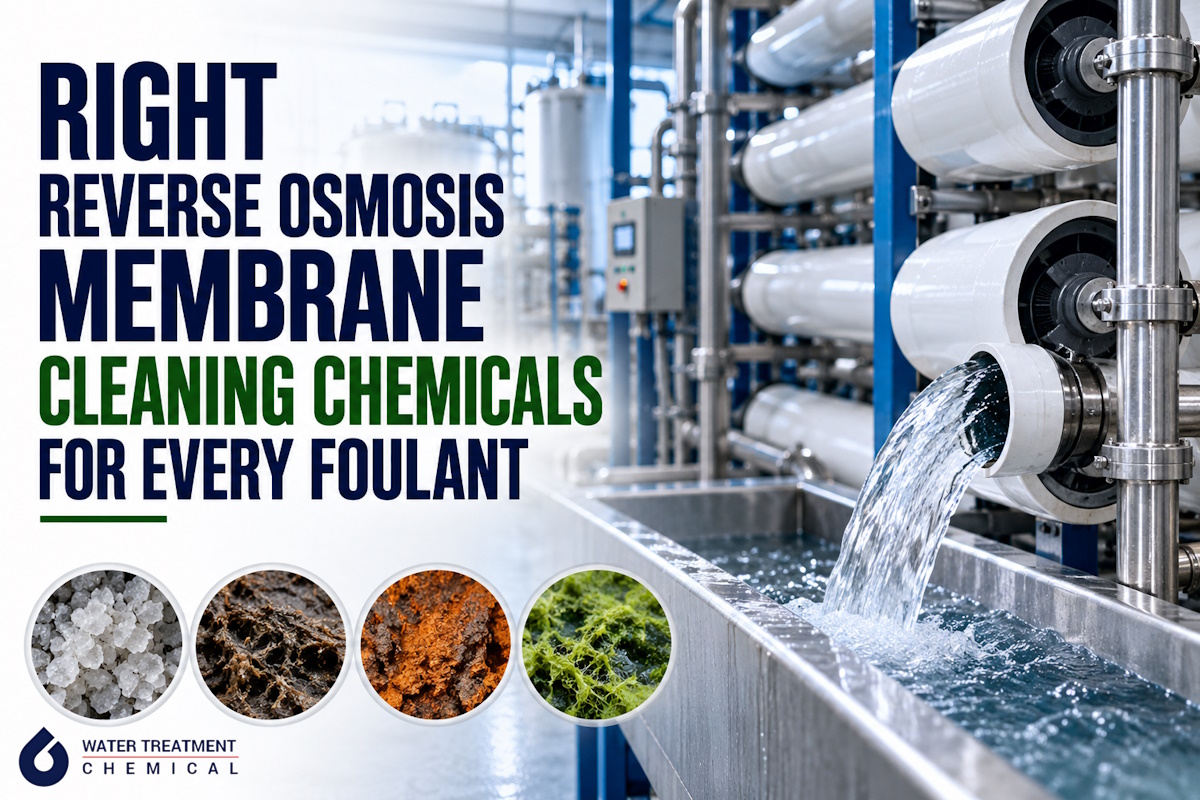
Industrial reverse osmosis systems are vital for producing high-purity process water, boiler feed water, and recycling industrial wastewater. However, the accumulation of suspended solids, dissolved salts, and biological matter on the membrane surface is an inevitable operational challenge. This accumulation, known as fouling, acts as a physical barrier that restricts water flow, increases operating pressures, and ultimately degrades the quality of the permeate water. If left unaddressed, severe fouling can lead to permanent membrane damage, forcing expensive, premature replacements and causing unscheduled plant downtime.
Restoring system performance requires a well-structured Clean-in-Place process using specialized chemicals. Selecting the correct reverse osmosis membrane cleaning chemicals is not a matter of using a one-size-fits-all formula, but rather a diagnostic decision based on the specific type of foulant present. Operators must accurately analyze whether they are dealing with inorganic scale, organic matter, metal oxides, or biological films to choose the appropriate pH-targeted chemical cleaners that will dissolve contaminants without damaging the delicate thin-film composite membrane structure. Partnering with an experienced industrial water treatment chemicals manufacturer like Rubmech ensures access to the precise chemical formulations needed to preserve membrane integrity.
Understanding Membrane Fouling: The Root Cause of Flux Decline
Membrane fouling occurs when impurities present in the feed water deposit onto the active surface of the reverse osmosis membrane during operation. As pure water passes through the semi-permeable membrane layer, these impurities become concentrated in the boundary layer adjacent to the membrane, a phenomenon known as concentration polarization. When the concentration of dissolved salts exceeds their solubility limits, precipitation occurs, leading to scale formation. Concurrently, suspended particulates, organic molecules, and microorganisms adhere to the membrane, creating a complex, multi-layered foulant matrix.
This accumulation manifests as three primary operational symptoms: a decrease in normalized permeate flow, an increase in feed-to-concentrate differential pressure, and an increase in salt passage. Monitoring these parameters daily is essential because cleaning a lightly fouled membrane is highly successful, whereas cleaning a heavily fouled membrane that has undergone physical compaction is extremely difficult. Understanding whether the root cause is inorganic scaling, organic deposition, or biofouling dictates the selection of targeted cleaning agents.
Categorising Fouling Types in Industrial RO Systems
Before selecting any chemical cleaning agent, operators must identify the specific foulant category. Mismatched cleaning chemistry can worsen the fouling. For example, applying an acid cleaner to an organic or biological foulant can cause the organic molecules to shrink and compact, making them nearly impossible to remove during subsequent cleaning cycles.
- Inorganic Scaling: This occurs when dissolved mineral salts precipitate out of the concentrated feed water. Common scales include calcium carbonate, calcium sulphate, barium sulphate, strontium sulphate, and silica. Calcium carbonate is highly sensitive to pH and forms rapidly in alkaline conditions, while silica scale is exceptionally difficult to dissolve once polymerized.
- Metal Oxide Fouling: Dissolved metals such as iron, manganese, and aluminium can oxidize in the feed water and deposit as insoluble hydroxides on the membrane surface. This is common in systems utilizing well water or those experiencing upstream piping corrosion.
- Organic Fouling: Natural organic matter, including humic and fulvic acids, as well as industrial organic contaminants like oils, greases, and surfactants, can adsorb onto the hydrophobic membrane polymer. This forms a slick, dense layer that severely restricts water passage.
- Biological Fouling (Biofouling): Microorganisms such as bacteria, fungi, and algae attach to the membrane surface and secrete extracellular polymeric substances. This creates a highly resilient biofilm that shields the microbes from standard biocides and resists high-velocity water shear forces.
- Colloidal and Particulate Fouling: Fine suspended particles, clays, silt, and colloidal silica can bypass pre-filtration systems and accumulate on the lead membranes of the system, causing a rapid increase in differential pressure.
Selecting Reverse Osmosis Membrane Cleaning Chemicals based on Foulant Type
Once the foulant type is identified, operators must select chemical formulations specifically engineered to target those chemical bonds. High-quality RO plant treatment chemicals supplier formulations are categorized into low-pH (acidic) and high-pH (alkaline) cleaning agents, alongside specialty biocides and sanitizing agents.
Acid Cleaners for Inorganic Scale and Metal Oxides
Acidic cleaning chemicals are designed to dissolve inorganic precipitates and metal oxides by lowering the pH of the cleaning solution, which increases the solubility of mineral salts. Citric acid is a widely used low-pH cleaning agent due to its mild nature and excellent chelating properties, which help bind metal ions like iron and calcium. For severe calcium carbonate or metal oxide scaling, blended mineral-acid formulations with specialized chelants and low-foaming surfactants are utilized to accelerate dissolution without degrading the polyamide membrane material. These acid cleaners typically target a target pH of 2.0 to 3.0 during the CIP process.
Alkaline Cleaners for Organic Matter, Biofilms, and Silica
Alkaline cleaning chemicals are formulated to target organic molecules, biological matter, and silica. High-pH solutions, typically maintained between pH 11.0 and 12.0, work by hydrolyzing organic proteins, saponifying fats and oils, and dissolving polymerized silica structures. These formulations often incorporate anionic surfactants to reduce surface tension and disperse particulate matter, as well as chelating agents like EDTA to break up the calcium-organic complexes that hold biofilms together. Alkaline cleaners are highly effective at swelling and loosening the dense extracellular polymeric substance matrix of a biofilm, allowing the high-velocity flush to sweep the biological debris out of the membrane elements.
Biocides and Sanitizers for Microbial Control
In systems prone to persistent biofouling, standard alkaline cleaning must be supplemented with non-oxidizing biocides or sanitizing agents. Polyamide thin-film composite membranes have extremely low tolerance for free chlorine and other strong oxidizers, which permanently degrade the membrane polymer and increase salt passage. Therefore, operators must use specialized, membrane-compatible non-oxidizing biocides to disinfect the system, kill remaining sessile bacteria, and prevent the rapid re-establishment of biofilms after the CIP cycle is complete.
Need Help Selecting the Right RO Cleaning Chemicals?
The Role of Cleaning Sequence: Acid First or Alkaline First?
In many industrial applications, membranes suffer from a combination of organic fouling and inorganic scaling. In these multi-foulant scenarios, the sequence of chemical application is critical to achieving successful restoration. The general industrial convention is to perform an alkaline clean first, followed by an acidic clean.
The reasoning behind this sequence is that organic matter and biofilms often coat the inorganic scale particles. If an acid cleaner is introduced first, it can cause the organic layer to contract, trapping the mineral scale underneath and reducing the acid’s access to the scale. Furthermore, the acid can cause organic proteins to precipitate and harden, forming a highly resistant barrier. By utilizing an alkaline cleaner first, the organic and biological matrices are dissolved and washed away, exposing the underlying inorganic scale and metal oxides to the subsequent acid cleaning step.
However, there are exceptions to this rule. If a system is treating highly mineralized water with negligible organic content, and the diagnostic data points exclusively to severe calcium carbonate scaling, an acid-only clean or an acid-first sequence is appropriate. Consulting with an experienced water treatment specialist helps ensure the correct protocol is established for your specific water chemistry.
Operational Parameters to Monitor During Clean-in-Place (CIP)
Executing an RO membrane cleaning cycle requires precise control over several operational variables. Deviations from recommended chemical limits can result in poor cleaning performance or permanent, irreversible damage to the membrane elements.
- pH Limits: Polyamide membranes have specific pH tolerances, typically ranging from 1 to 13, depending on the membrane manufacturer. Cleaning chemicals must be monitored closely to ensure the pH does not drift outside the safe operating envelope. Handheld, calibrated pH meters should be used to test the CIP solution every 15 minutes during the recirculation cycle.
- Temperature Control: Chemical reactions occur more rapidly at elevated temperatures. Cleaning at higher temperatures, such as 35 to 40 degrees Celsius, significantly improves the efficiency of both acid and alkaline cleaners. However, exceeding the maximum temperature limit specified by the membrane manufacturer, especially at extreme pH levels, can delaminate the membrane layers or cause structural compaction.
- Flow Rate and Pressure: The CIP pump must deliver the chemical solution at a low operating pressure, typically below 60 psi (4 bar). The objective is to recirculate the cleaning chemical across the membrane surface without forcing permeate production, which would cause foulants to compact further into the membrane pores. High flow velocity is desired to maximize physical shear stress, which assists in lifting loosened foulants.
- Soak Times: Heavily fouled membranes often require extended static soaking periods between recirculation cycles. Soaking allows the chemical cleaning agents to penetrate deep into the foulant layer, breaking chemical bonds that are resistant to simple flow shear.
Optimize Your Reverse Osmosis Membrane Lifespan Today
How to Establish a Proactive RO Membrane Cleaning Protocol
Waiting until the reverse osmosis system experiences a severe drop in permeate water production before initiating a CIP cycle is a common operational mistake. When flux decline exceeds 15% or the differential pressure increases by more than 15%, the foulant layer becomes heavily compacted. At this stage, the cleaning chemicals cannot easily penetrate the dense bed of contaminants, and the physical force required to dislodge them can cause membrane telescoping or mechanical damage.
A proactive cleaning protocol relies on normalized data. Since changes in feed water temperature, pressure, and salinity directly affect permeate flow and salt passage, raw operational data must be normalized to a standard set of reference conditions. A CIP cycle should be scheduled immediately when any of the following normalized parameters are reached:
- The normalized permeate flow decreases by 10% to 15%.
- The normalized feed-to-concentrate differential pressure increases by 15%.
- The normalized salt passage increases by 5% to 10%.
By cleaning at these early trigger points, the chemical cleaning process remains highly effective, chemical consumption is minimized, and the membranes can be repeatedly restored close to their baseline performance levels.
Key Procurement Considerations for RO Chemical Sourcing
Procuring reverse osmosis membrane cleaning chemicals requires careful evaluation of product quality, consistency, and compatibility. Because thin-film composite membranes are highly sensitive to chemical impurities, using sub-standard, generic industrial acids or bases can introduce heavy metals or insoluble compounds that permanently foul the system.
Procurement teams should prioritize sourcing from a dedicated specialty water treatment chemicals exporter like Rubmech. Specialized formulations are manufactured using high-purity raw materials and include balanced blends of surfactants, chelating agents, and pH buffers that are thoroughly tested for membrane compatibility. Furthermore, utilizing pre-formulated liquid or easily dissolvable powder concentrates reduces chemical handling hazards for plant operators and ensures consistent dosing during every CIP cycle, regardless of plant operating conditions. These high-performance chemical blends are engineered to support boiler cooling RO treatment chemicals programs across diverse industrial applications, safeguarding capital-intensive water treatment infrastructure.
Selecting the Optimal Chemical Formulation for Your RO Plant
Choosing the correct reverse osmosis membrane cleaning chemicals is a critical operational decision that directly impacts your plant’s water quality, energy consumption, and overall membrane lifespan. An effective cleaning program is built on accurate foulant identification, precise control of CIP parameters, and the utilization of high-purity, professionally formulated chemical agents. Implementing a proactive cleaning schedule based on normalized data, rather than reacting to severe system failures, prevents irreversible membrane damage and ensures long-term operational stability.
Because feed water characteristics and industrial operating conditions vary widely, there is no single solution for every plant. Plant managers and procurement teams should consult with experienced specialists to perform water analyses, evaluate operational data, and select the precise chemical formulations tailored to their specific fouling challenges. For expert guidance, product data sheets, or to obtain a tailored chemical recommendation for your system, please reach out to our team at Rubmech, your trusted water treatment chemical manufacturer contact, to discuss your specific requirements.