
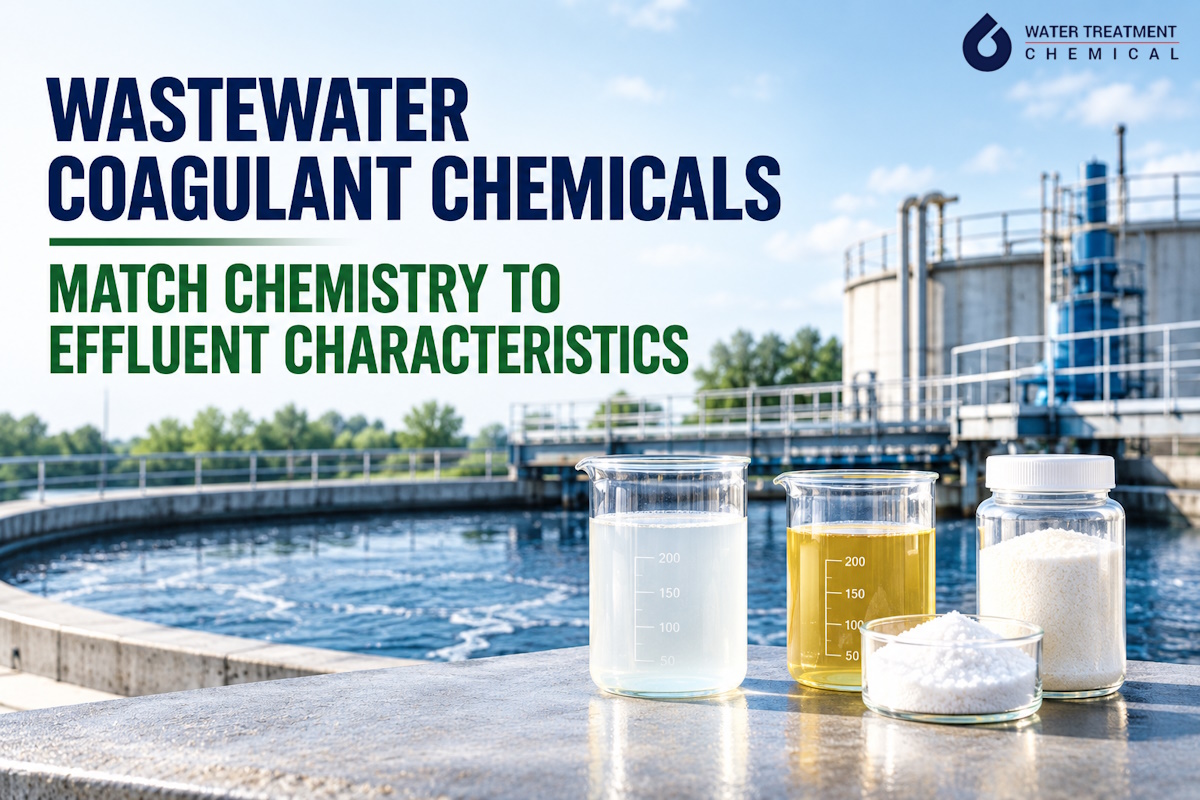
Industrial wastewater conditions can vary significantly between manufacturing plants, even within the same industry sector. Factors such as production cycles, raw materials, cleaning protocols, and seasonal water quality shifts create highly variable effluent profiles. When effluent treatment plants experience fluctuating total suspended solids, chemical oxygen demand, pH levels, or dye and organic loads, the immediate consequence is often a breakdown in clarification efficiency. Operating teams frequently struggle with rising chemical costs and regulatory discharge non-compliance because their treatment systems are not aligned with these rapid changes.
To overcome these operational challenges, selecting the correct chemical program is essential. Choosing the right wastewater coagulant chemicals is not a trial-and-error process on the factory floor, but a systematic decision based on the specific physical and chemical characteristics of the incoming raw wastewater. By analyzing parameters such as pH, alkalinity, dissolved organics, and particle charge density, plant managers and procurement teams can identify the exact inorganic or organic coagulants needed to optimize solid-liquid separation, reduce overall chemical consumption, and minimize the volume of sludge generated by their processes.
The Impact of Wastewater pH and Alkalinity on Chemical Performance
Every coagulant operates within a specific pH window where its chemical solubility and charge-neutralizing capabilities are most effective. Traditional metal salts, such as alum or iron-based coagulants, rely heavily on the natural alkalinity present in the wastewater. When these chemicals are added to water, they react with bicarbonate alkalinity to form insoluble metal hydroxide precipitates that trap suspended particles. If the incoming wastewater has low alkalinity or a highly acidic pH, this essential reaction cannot occur efficiently, leading to poor settling, pin-floc formation, and residual dissolved metals in the treated discharge.
In contrast, modern pre-hydrolyzed coagulants, such as poly aluminium chloride, bypass this dependency. Because they are partially pre-neutralized during manufacturing, they do not consume as much raw alkalinity from the wastewater, meaning the pH of the system remains much more stable during treatment. This makes them highly effective across a wider pH range. When sourcing these chemistries, plant operators often choose to work with a dedicated poly aluminium chloride RIP PAC supplier or a specialized poly aluminium chloride RIW PAC manufacturer to obtain the exact basicity grade required for their specific system pH, eliminating the need for expensive secondary pH correction chemicals.
How Suspended Solids and Turbidity Dictate Coagulant Selection
The concentration of total suspended solids and overall turbidity in the effluent are key drivers in determining both the type and dosage of the coagulant required. In systems with very high turbidity, there are numerous collid particles close together, which makes particle collisions and subsequent aggregation easier once their negative charges are neutralized. For these applications, high-charge inorganic coagulants or medium-weight organic polymers work efficiently to group the particles rapidly.
However, treating low-turbidity wastewater can be surprisingly difficult. Because the particles are highly dispersed, the probability of collisions is low, which can prevent the formation of visible, settleable flocs. In these scenarios, operators use a sweep-floc mechanism, where a slightly higher dose of metal coagulants is used to create a heavy precipitate cloud that physically sweeps the fine particles down as it settles. Alternatively, adding a highly charged organic polymer can bridges the gap between distant particles. Partnering with a reliable cationic DADMAC supplier or sourcing from an industrial wastewater treatment polyamine supplier allows plants to source high-charge organic coagulants that resolve low-turbidity clarification issues without generating excessive inorganic sludge.
Need Help Selecting the Right Coagulant?
Addressing Dissolved Organics, COD, and Color Challenges
Wastewater from industries such as textiles, pulp and paper, food processing, and chemical manufacturing often contains high concentrations of dissolved organic compounds, chemical oxygen demand, and complex color molecules. These dissolved substances carry negative charges and can interfere with traditional inorganic coagulants. The metal ions tend to react with the soluble organic molecules first rather than neutralizing the suspended solids, which dramatically increases the required chemical dosage and leads to high operational costs.
To treat these highly colored and organic-rich effluents effectively, specialty organic coagulants are required. Cationic decoloring agents and specialized polyamines are engineered to bind specifically with anionic color bodies and dissolved organics, precipitating them out of solution quickly. Collaborating with a professional color removal chemical manufacturer ensures that the effluent treatment plant can target complex dyes and organic contaminants directly, improving overall COD reduction and ensuring compliance with local color discharge limits. By utilizing specialized organic coagulants, plants can keep their chemical costs manageable while meeting strict environmental standards.
Comparing Inorganic and Organic Coagulants for ETP Efficiency
When selecting the ideal chemical program, procurement and engineering teams must evaluate the differences between inorganic coagulants and organic polymers based on their operational impact and total cost of ownership.
Inorganic Coagulants: Alum, PAC, and Iron Salts
Inorganic coagulants are highly effective for general solids removal, heavy metal precipitation, and phosphorus reduction. They are cost-effective per kilogram and widely available. However, they carry several operational drawbacks. They consume alkalinity, often require post-treatment pH adjustment, are highly sensitive to temperature variations, and generate a high volume of metal hydroxide sludge that must be dewatered and disposed of, which increases long-term waste handling costs.
Organic Coagulants: PolyDADMAC and Polyamines
Organic coagulants are synthetic polymers that offer high cationic charge density. Because they do not rely on hydrolyzing reactions, they do not alter the pH of the wastewater or consume alkalinity. They are highly effective at much lower dosages than inorganic coagulants, and because they do not add metal hydroxides to the system, they can reduce total sludge volume by up to 50 percent to 70 percent. This dramatic reduction in sludge handling and disposal costs often makes them the most economical choice overall. To find the right balance, plants often consult an industrial wastewater treatment chemicals manufacturer to design a dual-action program that combines both inorganic and organic chemistries.
Optimise Your Effluent Clarification Process
Understanding Coagulation and Flocculation Synergy
Coagulation is only the first step in the solid-liquid separation process. While coagulants neutralize the negative charges on colloidal particles to allow them to group into microflocs, these microflocs are often too small and light to settle quickly on their own. This is where flocculation becomes necessary. Flocculants, or polyelectrolytes, are very high molecular weight polymers that gather these microflocs and bridge them together into large, heavy aggregates that settle rapidly in the clarifier.
For this process to work efficiently, the chemistry of the coagulant and the flocculent must be highly compatible. If a plant uses a highly cationic organic coagulant, pairing it with a specific anionic polymer is often necessary to achieve optimal floc growth and clean supernatant water. Procurement teams must source high-performance polyelectrolytes, such as those from an established anionic polyacrylamide manufacturer or a cationic polyacrylamide supplier, to ensure that the chemical synergy is maintained, preventing floc shear and carryover in the clarification zone.
The Practical Importance of Jar Testing for Chemical Selection
Because every industrial wastewater stream has its own unique chemical makeup, copy-pasting a chemical program from one plant to another rarely works. The only reliable way to determine the correct coagulant and flocculant combination, along with its optimal dosing window, is through systematic jar testing. Jar testing simulates the full-scale coagulation, flocculation, and settling processes in a controlled laboratory environment, allowing plant engineers to observe the real-time reactions of different chemistries.
During a standard jar test, operators evaluate several key variables:
- Optimal pH ranges: Determining whether the wastewater requires pre-acidification or alkalization to maximize coagulant efficiency.
- Exact dosage requirements: Finding the exact point of charge neutralization to avoid under-dosing (which causes poor clarity) or over-dosing (which restabilizes particles and wastes chemicals).
- Flash mix and slow mix speeds: Simulating the physical shear forces of the plant to prevent floc breakage.
- Settling rates: Measuring how fast the flocs settle and assessing the clarity of the remaining water.
Conducting these tests on a regular basis, especially when raw water conditions shift, ensures that the effluent treatment plant runs at peak efficiency, preventing chemical waste and protecting downstream equipment like membrane filters and biological units.
Evaluating Total Cost of Ownership in Chemical Sourcing
For procurement managers, selecting wastewater coagulant chemicals solely based on the price per kilogram can lead to expensive operational mistakes. A low-cost inorganic coagulant may seem budget-friendly on paper, but if it requires four times the dosage of a premium organic polymer, demands heavy acid or alkali dosing for pH control, and doubles the volume of hazardous sludge requiring expensive disposal, the actual operating costs will be much higher. Evaluating the total cost of ownership requires a holistic view of the entire water treatment cycle, balancing chemical purchase prices against dosage efficiency, energy consumption, system maintenance, and waste management costs.
Working with an experienced chemicals supplier helps plants analyze these interconnected costs. By selecting advanced, high-purity formulations designed for specific applications, industrial facilities can lower their overall operating costs, reduce chemical handling risks for their operators, and ensure consistent compliance with environmental discharge regulations.
Discuss Your Wastewater Chemical Requirements
Choosing the Right Chemical Approach for Your ETP
Optimizing an effluent treatment plant requires a careful balance of chemical science, operational discipline, and smart procurement. Effluent characteristics such as pH, alkalinity, total suspended solids, organic loads, and color must serve as the primary guide when selecting your chemical treatment program. Whether your plant requires a robust pre-hydrolyzed inorganic option like poly aluminium chloride or a highly charged organic polymer like PolyDADMAC or polyamine, the ultimate goal remains the same: achieving clean, compliant discharge water while minimizing total operating costs and sludge generation.
Because water chemistry is complex and constantly changing, partnering with an experienced manufacturer is key to long-term success. As a leading industrial water treatment chemicals manufacturer and global exporter, Rubmech provides high-purity, field-proven chemical solutions tailored to the rigorous demands of modern industrial processing plants. If you are looking to resolve coagulation failures, reduce sludge volumes, or optimize your chemical consumption, our technical team is ready to analyze your effluent profile and provide custom chemical recommendations. Contact us today to request water treatment chemical quotation and discuss how we can support your plant operations.